Description
This section of your product description has excellent use of passive voice and transition words, but the sentence structures are quite long, leading to a sentence length error (hard to digest in one breath).
Here is the full text rewritten with a focus on breaking down those long sentences for better readability, while maintaining the passive voice and transition words:
Revised Product Description (Corrected Sentence Length & Flow)
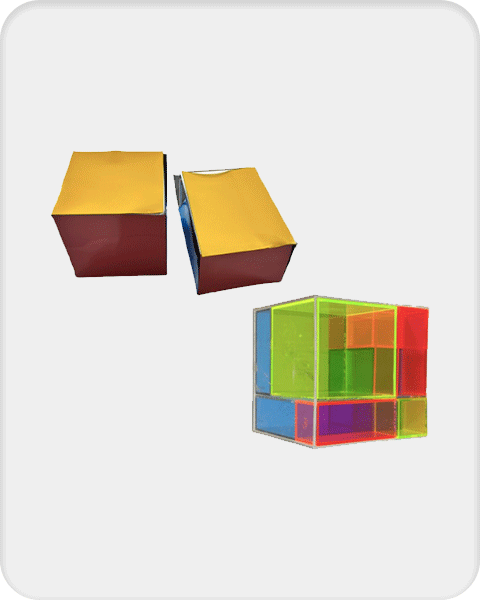
The complexity of three-dimensional measurement is unlocked today with our essential resource on Surface Area Models and Nets Explained! Visualizing how flat shapes (nets) fold into 3D objects is recognized as the critical first step in mastering surface area calculations. Therefore, this comprehensive guide is perfectly designed for students, educators, and visual learners. Every definition, visual example, and formula that is required to master this core geometric concept is provided.
What’s Essential to This Concept?
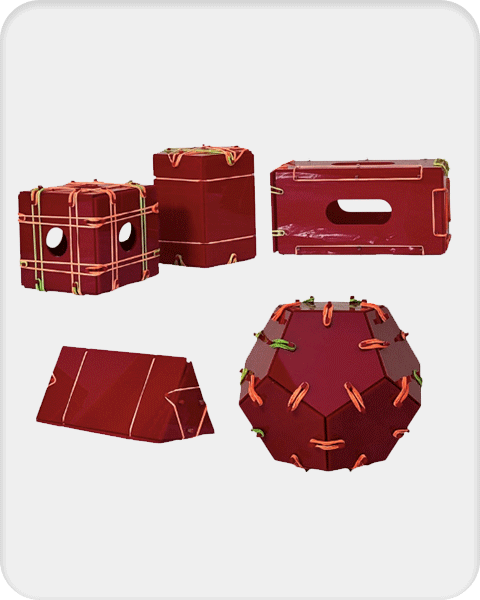
Furthermore, visual examples of Surface Area Models and Nets Explained are readily offered for common solids. These include cubes, prisms, cylinders, and pyramids.
The primary formulas for calculating the total surface area (A) of each solid are thoroughly analyzed. This is accomplished by dissecting its component faces.
Consequently, step-by-step instructions are clearly presented. These instructions demonstrate how the transformation of a 3D solid into its net is achieved. Additionally, how the area of the individual faces is utilized for the determination of the final surface area is shown.
Learn Essential Geometric Skills, Hands-On
Consequently, the learning of Surface Area Models and Nets Explained is ultimately considered more than merely the memorization of formulas. Instead, it is firmly established as a critical gateway. Through this gateway, essential spatial reasoning and visualization skills are effectively developed. Furthermore, logic, 3D visualization, and a deep appreciation for geometric principles are robustly fostered by means of this perfect resource.