Description
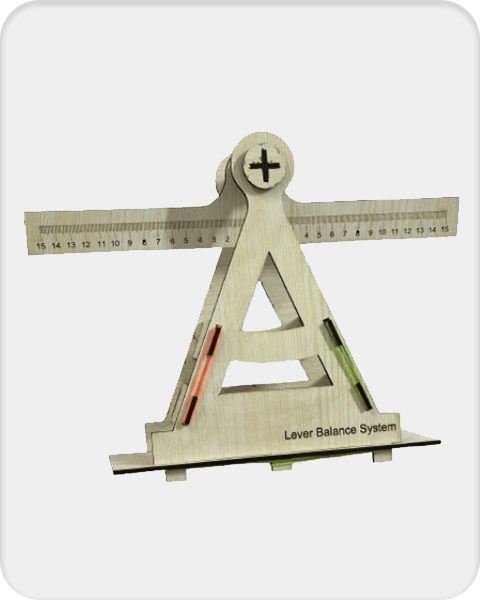
Start mastering the principles of mechanical advantage today with the all-in-one Lever System Kit from Sagedel. This essential apparatus is perfectly designed for middle school, high school, and introductory college physics labs. It provides every component, weight, and ruler needed to study the three classes of levers right out of the box. Furthermore, its durable, calibrated beam ensures accurate, repeatable experimental results.
Key Components and Design Features
This meticulously assembled kit ensures a genuine, practical, and comprehensive learning experience.
Calibrated Beam: A rigid, precisely marked beam with clear measurements for accurate placement of effort and load.
Movable Fulcrum: A stable, adjustable pivot point that allows easy configuration of all three lever classes.
Weight Set: Includes calibrated mass hangers and slotted weights for applying accurate load and effort forces.
Measuring Tools: Integrated rulers or scales for measuring the effort arm and load arm lengths.
Detailed experimental manual with step-by-step procedures for calculating mechanical advantage and efficiency.
Learning Outcomes and Educational Value
This Lever System Kit is more than just a balance; it is a gateway to understanding engineering basics and the physics of simple machines. Because we designed this kit to be an engaging, hands-on learning tool, it is ideal for students exploring introductory mechanics.
Practical Applications and Study Skills
The Lever System Kit is a vital tool for improving measurement accuracy and applying mathematical formulas to physical systems. For example, students can use the apparatus to confirm the principle of moments (effort × effort arm = load × load arm).
Students can practice setting up and distinguishing between first-class, second-class, and third-class levers.
They observe the trade-off between the force required (effort) and the distance the load is moved.
Therefore, users gain practical knowledge of simple machines, mechanical advantage, and fundamental Newtonian physics, preparing them directly for engineering and technical fields.
Order your Lever System Kit today and start calculating the power of leverage!