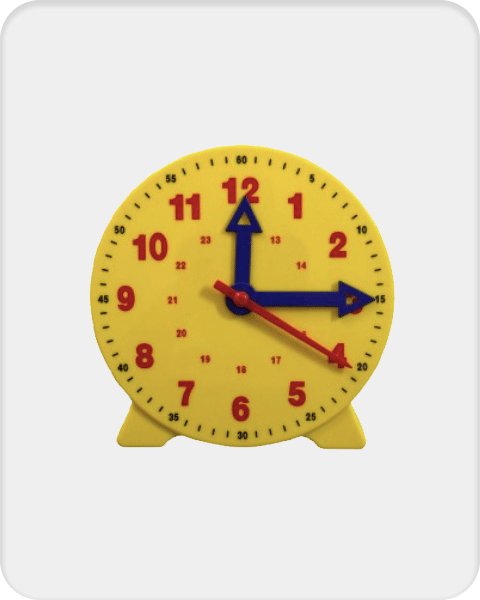
Mechanical Clock

To understand Concept of Time: Seconds, Minutes and Hours.

Time, Rotation & Measurement

This gear-based model shows how hours, minutes, and seconds are generated through rotational motion.

It helps students understand time measurement, angular motion, and real-world applications of ratios and circular movement.

Description

Start understanding the physics of time today with the all-in-one Mechanical Clock model kit from Sagedel. This kit is perfectly designed for STEM classrooms, engineering students, and dedicated hobbyists. It provides every gear, weight, and component needed to build a fully functional, visible clock right out of the box. Furthermore, watching the intricate mechanics in action enhances your understanding of simple machines.


Key Components and Design Features


This meticulously assembled model ensures a genuine, practical, and comprehensive learning experience.

  • Visible Gear Train: Features clear components to easily observe the transfer of energy from the drive weight to the escapement.
  • Escapement Mechanism: Includes a detailed pendulum and escapement system to illustrate accurate time regulation.
  • Durable Materials: Precision-cut components (often wood or acrylic) designed for repeated assembly and durability.
  • Instructional Guide: A step-by-step manual that explains the function of the mainspring, gear ratios, and the timekeeping cycle.
  • Wall or Table Mounting: Designed for easy display once construction is complete.


Learning Outcomes and Educational Value


This Mechanical Clock model is more than just a timepiece; it is a gateway to understanding classical physics and precision engineering. Because we designed this kit to be an engaging, hands-on learning tool, it is ideal for visual and kinesthetic learners.


Practical Applications and Study Skills


The Mechanical Clock model is a vital tool for improving spatial reasoning and technical problem-solving. For example, students can use the model to calculate gear ratios and measure the effect of pendulum length on accuracy.

  • Students can practice following complex assembly diagrams and precision alignment techniques.
  • They observe the conversion of potential energy (weight) into kinetic energy (motion) and its controlled release.
  • Therefore, users gain practical knowledge of physics, engineering design, and historical timekeeping technology, preparing them for advanced mechanics and STEM fields.

Order your Mechanical Clock model today and start building the physics of time!